

Location
National Park “Shar Mountain” is located in the north-western part of the Republic of North Macedonia, along the state border with the Republic of Kosovo.
The Park covers a significant portion of the Shar Mountain massif, one of the largest and highest mountain systems on the Balkan Peninsula.
The Park’s territory extends in a northeast–southwest direction, overlooking the Polog Valley, and covers an area of 62,705 hectares.
Administratively, the National Park includes parts of the municipalities of Jegunovce, Tearce, Tetovo, Bogovinje, Vrapchishte, Gostivar and Mavrovi Anovi.
Due to its geographical position, the National Park represents a natural transition zone between continental and Mediterranean climatic influences, resulting in a high diversity of habitats and exceptional biological richness. At the same time, its location along an international border gives it an important role in transboundary nature conservation and the establishment of ecological corridors in the Balkans.
Within the Park is the Popova Shapka ski resort, which includes three cable cars, several small and medium ski lifts, and approximately 20 km of ski slopes.
History
The idea of protecting Shar Mountain as a high-category natural area dates back to the mid-20th century. Due to its outstanding natural, landscape and biological values, Shar Mountain was early recognized by the scientific and professional community as an area of national and international importance.
During the period of the former Yugoslavia, several expert studies and proposals for protection were prepared, but they did not result in formal designation, mainly due to the large area, the presence of settlements and traditional economic activities.
After the independence of the Republic of Macedonia in 1991, Shar Mountain again emerged as a priority in national strategies and spatial plans for nature protection.
In the following decades, various protection models were considered, but the process was delayed due to complex ownership relations, economic interests and the need to align protection measures with the interests of the local population.
More concrete activities toward the proclamation of a National Park began after 2015, in the context of the country’s European integration process and alignment with EU nature protection legislation. During this period, expert valorization studies were prepared, the boundaries of the protected area were defined, and zoning according to protection levels and permitted activities was proposed.
Following public consultations and stakeholder involvement, on 30 June 2021, the Assembly of the Republic of North Macedonia adopted the Law on Proclaiming Part of Shar Mountain a National Park. With this act, Shar Mountain became the fourth national park in the country, with a protected area of 62,705 hectares.
Today, National Park “Shar Mountain” represents a key pillar of the national system of protected areas and provides a foundation for the long-term conservation of one of the country’s most valuable natural assets.
Nature
Flora
National Park “Shar Mountain” is one of the most floristically rich areas on the Balkan Peninsula. More than 1,600 plant species have been recorded, including a significant number of endemic and relict species.
The Park is home to 662 species of diatoms, 1,260 species of vascular plants, more than 260 species of mosses, around 500 species of fungi, and 160 species of lichens.
High-mountain areas are dominated by alpine and subalpine plant communities, while lower elevations are covered by deciduous, coniferous and mixed forests. Approximately 75% of the forests are pure stands, predominantly beech and oak. Other tree species include spruce, fir, chestnut, juniper, mountain maple, as well as endemic and relict species such as Macedonian pine (Pinus peuce) and Bosnian pine (Pinus heldreichii).
Of particular importance are some of the last continuous mountain forest complexes in the Balkans, which provide habitats for rare and sensitive species.
Fauna
Shar Mountain hosts a highly diverse fauna. Recorded are 56 species of mollusks, nearly 300 species of pseudoscorpions, spiders and crustaceans, and a total of 1,847 insect species, including over 900 butterfly species and 160 beetle species.
In freshwater habitats, five fish species have been confirmed, including the Macedonian trout. These habitats also support 11 amphibian species and 17 reptile species, representing 78.5% of the national amphibian fauna and 47% of the national reptile fauna.
Birds constitute the most species-rich group of vertebrates, with 128 recorded species, including numerous birds of prey such as the golden eagle, griffon vulture, Egyptian vulture and peregrine falcon. A total of 51 mammal species have been recorded, including the brown bear, Eurasian (Balkan) lynx, wildcat, otter, chamois, wolf, wild boar and red fox.
Geomorphology and Landscape
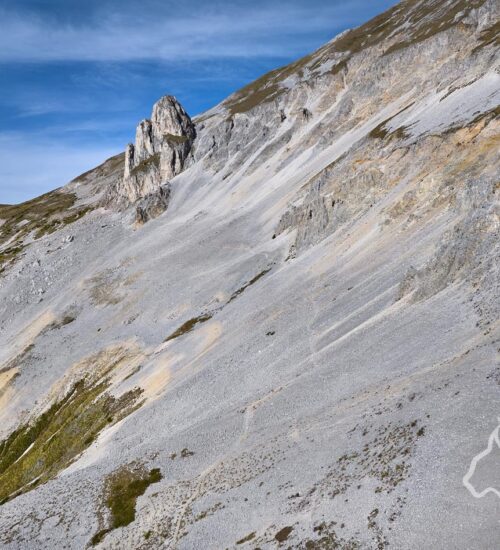
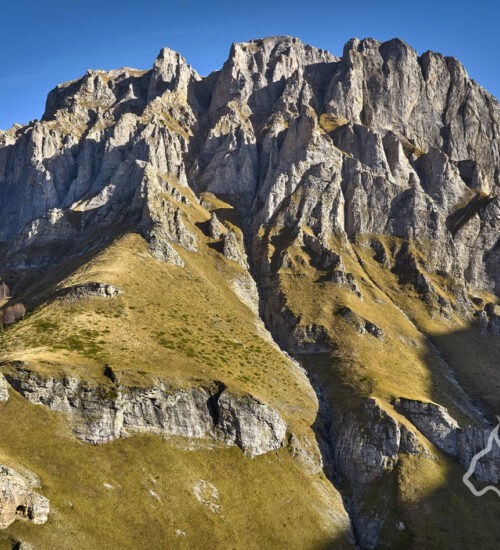
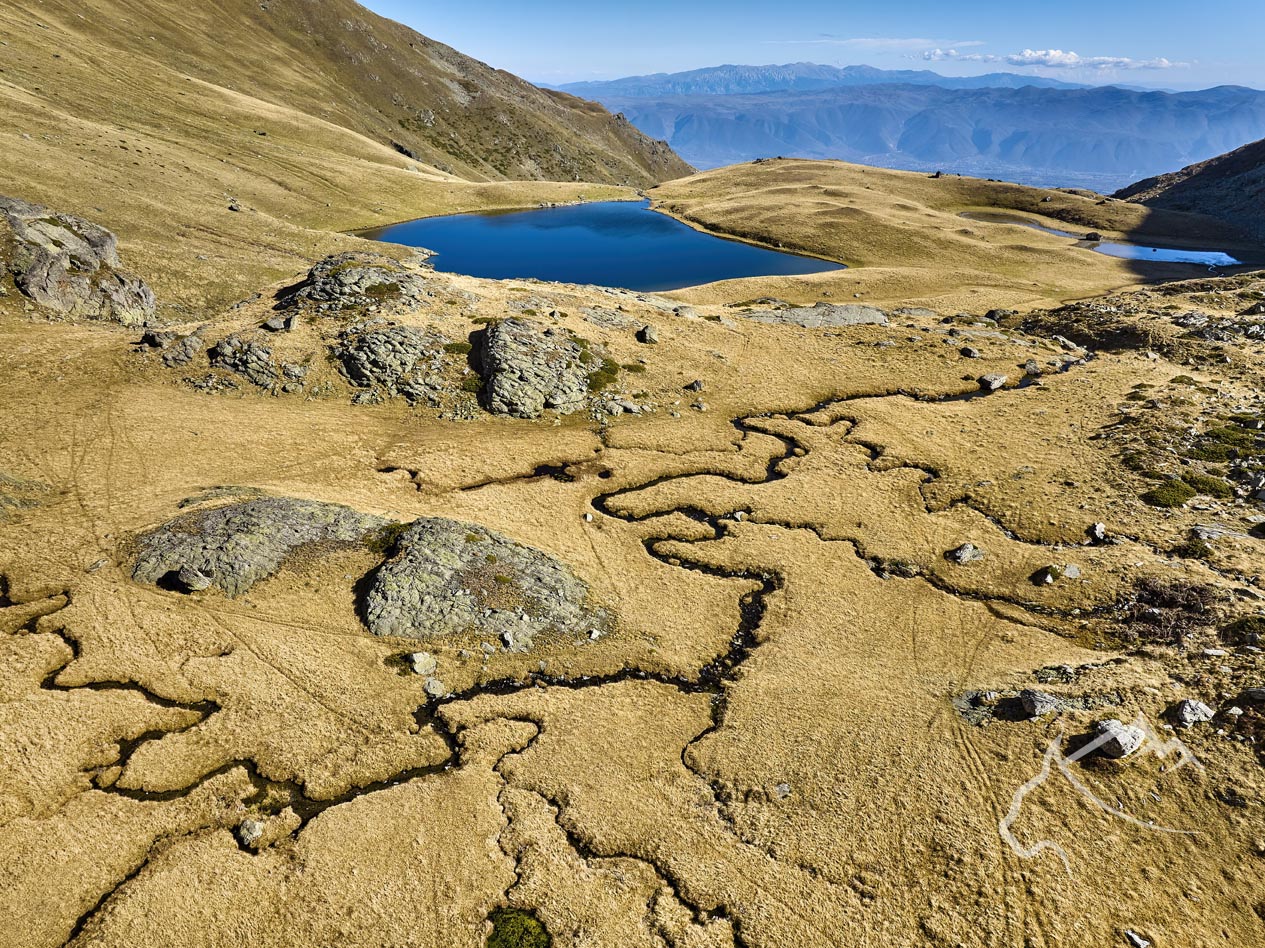
Shar Mountain extends over a length of approximately 75 km and has the highest number of peaks above 2,000 m compared to all other mountains in North Macedonia combined. Approximately 220 peaks exceed 2,000 m, of which 41 peaks are above 2,500 m and 12 peaks exceed 2,600 m, with the highest point being Titov Vrv (2,747 m).
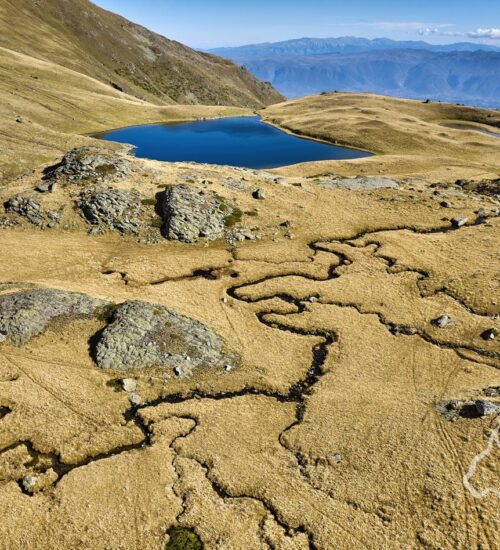
The relief is shaped by complex glacial and fluvial processes, resulting in a dense network of valleys, gorges, basins, rapids and waterfalls. The geological structure is dominated by Paleozoic metamorphic rocks, with occurrences of quartzites, marbles, granitoids and carbonate rocks affected by karstification. To date, entrances to around ten caves and several sinkholes have been recorded, mainly in the limestone areas of the Pena River valley.
Landmarks and Cultural Heritage
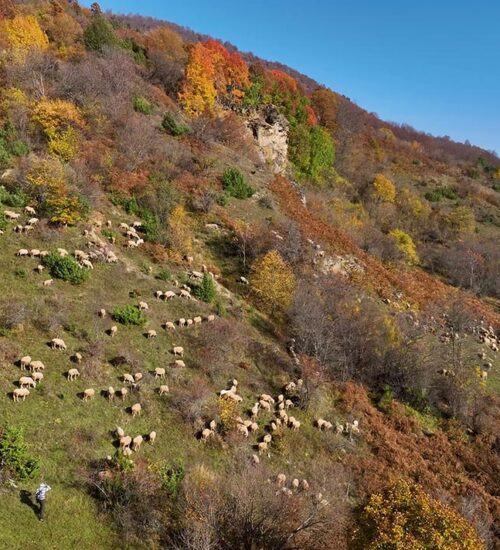
In addition to its natural values, the territory of the National Park is rich in cultural heritage. Archaeological sites, religious buildings and cultural landscapes—such as traditional mountain pastures—are present throughout the area. Mountain villages are characterized by distinctive architectural styles and the use of traditional building materials.
Shar Mountain also has a long skiing tradition. The first Shar Mountain Ski Cup was held at Popova Shapka in 1947, making it the oldest international ski competition in the Balkan region.
Landmarks and Cultural Heritage
In addition to its natural values, the territory of the National Park is rich in cultural heritage. Archaeological sites, religious buildings and cultural landscapes—such as traditional mountain pastures—are present throughout the area. Mountain villages are characterized by distinctive architectural styles and the use of traditional building materials.
Shar Mountain also has a long skiing tradition. The first Shar Mountain Ski Cup was held at Popova Shapka in 1947, making it the oldest international ski competition in the Balkan region.
Tourism
Tourism represents one of the key sectors with the greatest potential for sustainable economic development. Shar Mountain offers opportunities for both mass and alternative forms of tourism. The long-term vision of the National Park is to support tourism activities with low environmental impact, including adventure tourism, rural tourism, nature-based tourism, geotourism and wildlife observation.
Connectivity
The National Park is directly connected to the cities of Tetovo and Gostivar. The Park Administration is located in Tetovo, approximately 45 km from Skopje and the international airport. Popova Shapka ski resort is about 20 km from Tetovo. The Park includes a network of paved and unpaved roads with regulated access regimes.