

Location
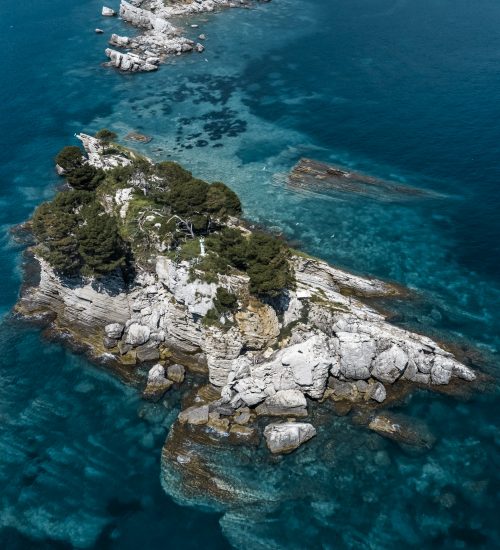
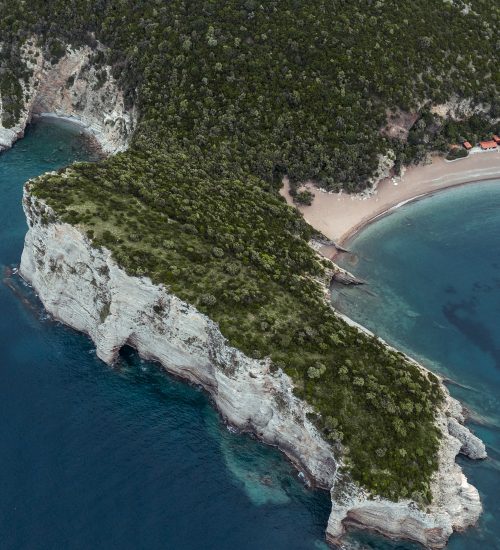
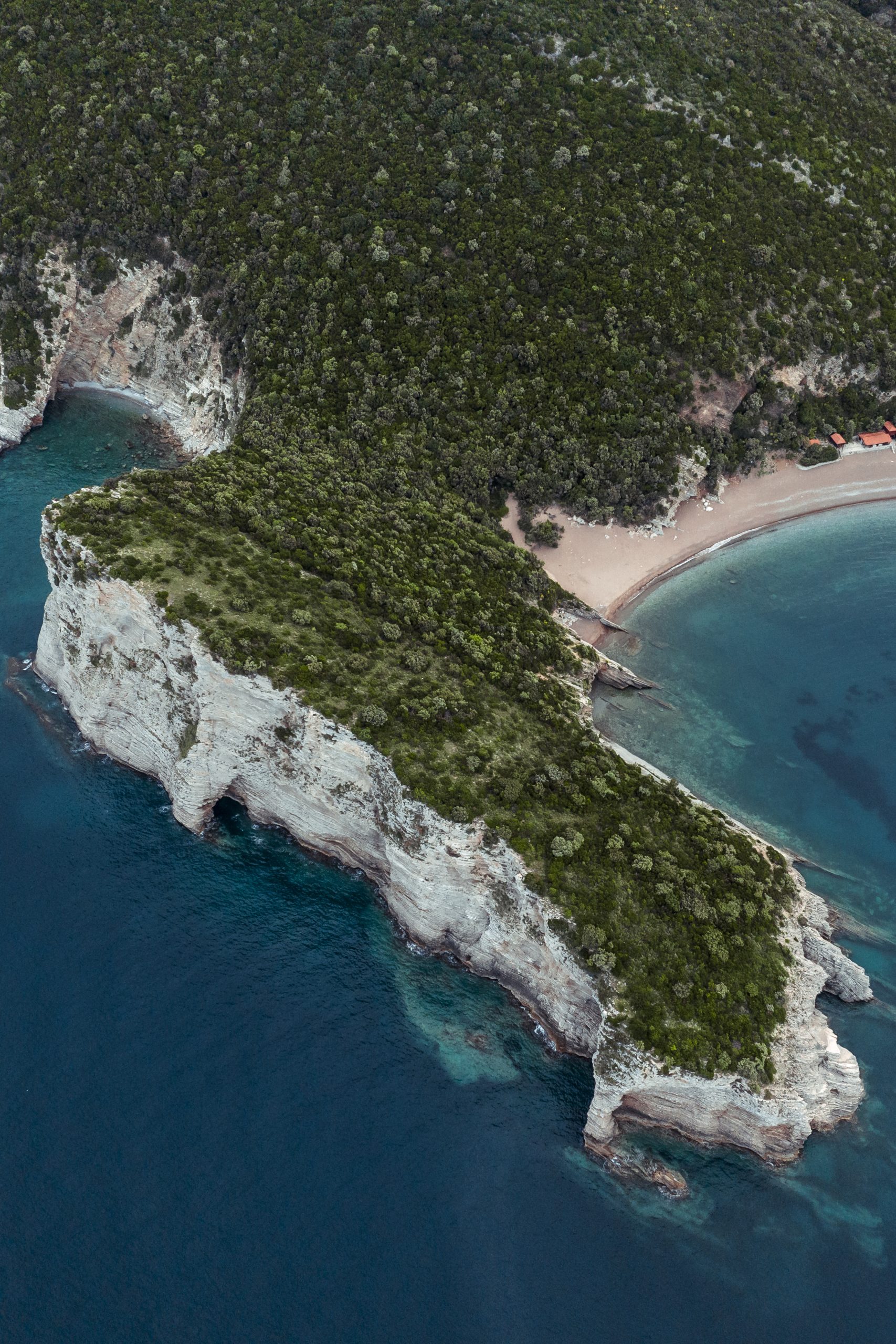
Katič Nature Park is located in the central part of the Montenegrin coast. It includes the coastal and marine area from Cape Skočiđevojka to Maljevik Bay, covering the beaches of Perazića Do, Petrovac Beach, Lučice, Buljarica, Perčin, Čanj, and Maljevik, as well as two islands – Katič and Sveta Neđelja.
Katič Nature Park is the largest marine protected area in Montenegro, with a total surface of 2,744 hectares, of which 2,568 hectares belong to the sea and 176 hectares to land.
History
In 2021, the Government of Montenegro adopted a Decision declaring Katič Nature Park a protected area, making it the second integrated coastal and marine protected area in Montenegro.
This protected area is classified as Category IV, which includes areas where wild plant and animal species and their habitats are protected and managed for conservation purposes.
Nature
The area of Katič Nature Park is protected due to the value of its biodiversity, especially the habitat of the protected seagrass Posidonia oceanica, locally known as “murava.”
Posidonia is a Mediterranean endemic species that functions as the “lungs” of the Mediterranean due to its intense oxygen production, generating between 14 and 20 liters of oxygen per square meter daily.
In addition to Posidonia, important habitats include coralligenous biocenoses near the island of Veliki Katič and in Maljevik Bay, as well as caves—particularly in Perčin Bay.
A total of 92 species of organisms have been recorded in the open sea area of the park. Notable protected species include: seagrass (Cymodocea nodosa)
, brown algae (Cystoseira amentacea), stony coral (Cladocora caespitosa), long-spined sea urchin (Centrostephanus longispinus), date mussel (Lithophaga lithophaga), noble pen shell (Pinna nobilis).
One of the most interesting and endangered species in the park is the dusky grouper (Epinephelus marginatus). This species is unique because it is born female and later changes sex to become male, usually between 9 and 15 years of age or when reaching a length of 60–90 cm.
The species is critically endangered due to overfishing, habitat destruction, and its slow and complex life cycle.
The coastal belt of the park is characterized by woody spurge, a protected species of international importance recognizable by its woody structure and distinctive appearance. It blooms in spring, decorating coastal cliffs with yellow flowers.
Other Mediterranean plants, including endemic species of the genus Limonium, can also be found.
The park is home to:
27 species of amphibians and reptiles
12 bird species
4 mammal species
23 insect species
Landmarks and Tourism
A distinctive feature of the park’s landscape is the Church of St. Nedelja on the island of the same name, surrounded by several legends.
According to one legend, the church was built by a Greek sailor who shipwrecked on a third, submerged island known as Donkova Seka.
Evidence of human presence along the coast dates from prehistory to the present, including Bronze and Iron Age tumuli in the hinterland, the Roman site of Mirište, and the impressive walls of Kastel and Lazaret, which played an important role in maritime life during the Middle Ages.
The underwater cultural heritage includes numerous shipwrecks—from Hellenistic and ancient trading vessels to late medieval galleons and more recent warships.
The cruiser Zenta is the only known shipwreck in this area of modern archaeological significance (launched on August 18, 1897, in Pula).
Fragments of fossilized amphorae have also been found in the rocks near the island of Katič, and an important underwater archaeological site exists in Maljevik Bay.
The natural beauty and phenomena of Katič Nature Park form the basis for nature-based tourism.
The two characteristic islands—Katič and Sveta Neđelja—along with cliffs, bays, and numerous natural beaches, offer unforgettable landscapes and opportunities for photography, nature observation, and active отдых.
The rich underwater world, with vibrant coralligenous communities and sea caves, as well as terrestrial habitats with endemic flora, make the park ideal for activities such as:
diving
kayaking
sailing
coastal hiking
scientific and educational tourism.
Accessibility
Katič Nature Park is a marine protected area most easily reached by boat. The nearest port is in Budva, while Petrovac has a dock for smaller boats.
If arriving by land, the easiest access is from Petrovac. Petrovac is connected to other coastal towns via the Adriatic Highway.
Another important route leads from Podgorica through the Sozina Tunnel, branching at Mišići toward Bar and Petrovac.
Petrovac can also be reached via the regional road over Paštrovačka Gora, although this route is less commonly used since the construction of the Sozina Tunnel.
Petrovac is located 39 km from Tivat Airport and 47 km from Podgorica Airport.
Contact
Adress
Javno preduzeće za upravlajnje morskim dobrom Crne Gore
Popa Jola Zeca bb
85310 Budva
Crna Gora
Telephone
+382 33 452 709
Web: www.morskodobro.com